JGI Contributes Nine to 2022 Highly Cited Researchers List
This year’s list features 6,900 researchers working in 21 fields.
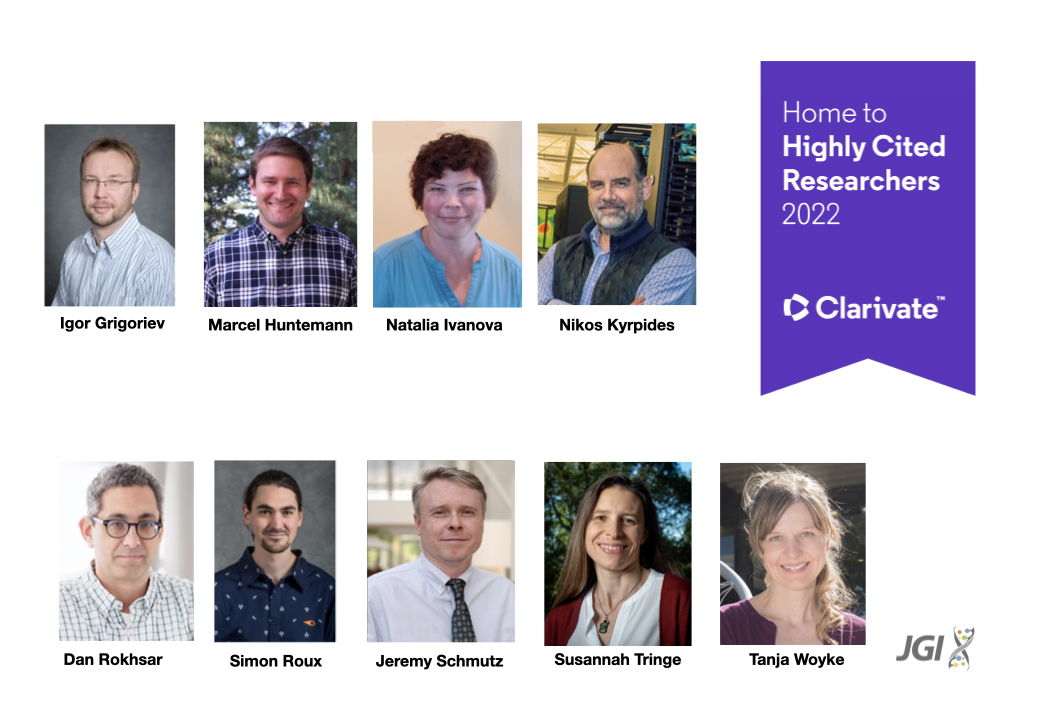
Congratulations to the 2022 Highly Cited Researchers from the JGI recognized for their “significant influence in their chosen field or fields through the publication of multiple highly cited papers during the last decade” by Clarivate Analytics.
Those from the JGI whose publications rank in the top 1% by citations for field and publication year are:
Here’s a selection of studies these busy bees contributed to:
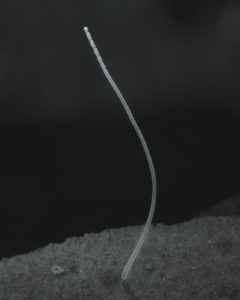
Single filament of Ca. Thiomargarita magnifica (Jean-Marie Volland)
Giant bacteria visible to the naked eye: Natalia Ivanova and Tanja Woyke both contributed to ground-breaking research following the discovery of bacteria 5,000 times the average size. Woyke’s Single Cells Group helped better-understand what the sulfur-oxidizing, carbon fixing bacterium was doing in the Guadeloupean mangroves where it was found. The study was featured on the New York Times 2022 List of Firsts as well as other year-end science discovery lists.
Its latest addition — made possible in part by contributions from Ivanova, Woyke, Marcel Huntemann, Nikos Kyrpides and Simon Roux — features 600 genome sequences for Actinobacteria.
Woyke was also one of three authors on a recent study that made the cover of Nature Reviews Microbiology, summarizing insights from three decades of work on giant viruses — providing a perspective on giant virus diversity, and how sequencing and bioinformatics have sped up the study of giant viruses.
Kyrpides and the JGI’s IMG/M Data Portal were instrumental to a study that looked into how soil viruses, and in particular a chitosanase protein, can contribute to soil health. He also contributed to an update of the JGI’s Genome OnLine Database (GOLD) database that also marked the platform’s 25th anniversary, published in Nucleic Acids Research.
ID’ing RNA viruses with ease: Searching for RNA sequences within a database can be like combing for the proverbial need in a haystack — until now. Scientists have recently created a computational pipeline that scans specifically for RNA virus sequences, initially using it to comb through more than 5,000 data sets and thereby increasing RNA virus diversity five-fold.
Ivanova, Roux and Kyrpides are all authors on the study. Huntemann, Woyke, Igor Grigoriev and Susannah Tringe also contributed as part of the study’s RNA Virus Discovery Consortium.
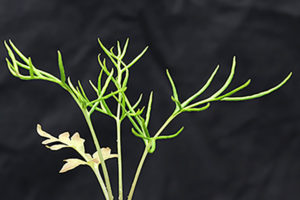
As it turns out, Ceratopteris richardii has been hoarding and co-opting genes for millenia — making it both enormous and complex.(David Randall and Zhonghua Chen)
The reasons behind C-fern’s size and complexity revealed: C-fern is typical of most ferns in many ways, including its large genome with numerous chromosomes. This recent study, including work from Jeremy Schmutz, reveals that C-fern’s size and complexity is not due to whole-genome duplication, as was previously thought. Instead, it turns out this fern has been co-opting genes from bacteria.
Dan Rokshar contributed to the demystification of cassava related to recent advances in genome assemblies for the heterozygous staple crop, as well as the discussion of key cassava genomic resources. Genome annotations for cassava are available on the JGI plant portal Phytozome.
The U.S. Department of Energy Joint Genome Institute, a DOE Office of Science User Facility located at Lawrence Berkeley National Laboratory, is committed to advancing genomics in support of DOE missions related to clean energy generation and environmental characterization and cleanup. The JGI provides integrated high-throughput sequencing and computational analysis that enable systems-based scientific approaches to these challenges.
DOE’s Office of Science is the largest supporter of basic research in the physical sciences in the United States, and is working to address some of the most pressing challenges of our time. For more information, please visit energy.gov/science/office-science.
Prospective users are encouraged to reach out to program heads with questions about the JGI’s science and opportunities to partner with the JGI on their research.
Learn more about calls available through our Community Science Program, as well as collaborative calls with our partner facilities and other opportunities.