Datasets
IMG/M Data portal
Contacts
PI Contacts
Yasuo Yoshikuni
DNA Synthesis Program Head
DOE Joint Genome Institute
[email protected]


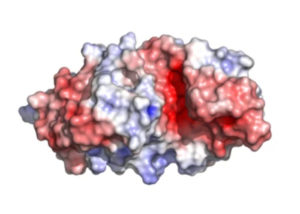
Through a collaborative effort, researchers have identified a protein in soil viruses that may promote soil health. The work was enabled in part by a community data portal of the U.S. Department of Energy (DOE) Joint Genome Institute (JGI), a DOE Office of Science User Facility located at Lawrence Berkeley National Laboratory (Berkeley Lab). Using 5,000 images of crystalized samples cloned and synthesized by the JGI, scientists have begun the complex process of uncovering the hidden secrets of soil viruses.
The specific protein described in a recent study in Nature Communications, a chitosanase, is tied to carbon cycling and plays an important role in how carbon is processed and cycled in soils. Ultimately, changes in soil carbon content can influence atmospheric carbon dioxide concentrations and thereby affect climate. The protein itself could actually help promote soil health.
Soil viruses are a reservoir of genetic diversity and capable of transferring genes from one host microbe to another, which can have a significant impact on the microbial communities within soil. Using metagenomics, scientists can shed light on hidden components, including genes called auxiliary metabolic genes (AMGs) that have nothing to do with a virus’ primary focus — replicating itself.
Chitin is found in the cell walls of fungi and the exoskeleton of insects. It is one of the most commonly found carbon biopolymers in nature, second only to cellulose.
Chitin is also a common food source for microbes living within soil. So, the chitosanase protein identified in the study is essentially chewing food to help microorganisms thrive — and those microorganisms affect a lot of the molecular processes going on in soil, including carbon cycling.
The team was led by researchers from the Pacific Northwest National Laboratory (PNNL), with additional support from the SLAC National Accelerator Laboratory. After PNNL researchers identified a number of AMGs in soil viruses thought to break down chitin, the gene sequences were cloned by the JGI.
The JGI’s DNA synthesis team synthesized and cloned both chitosanase genes and mutants. DOIs of publicly available chitosanase sequences were retrieved using the JGI’s Integrated Microbial Genomes & Microbiomes (IMG/M) data portal. The IMG suite is a community resource for comparative analysis and annotation of all publicly available genomes in three domains of life.
Using the IMG suite, JGI retrieved 142 of the GH75 AMGs, which encode enzymes that break down chitin. A protein tree was then constructed with the sequence data to compare viral chitosanases to others like it available in public databases. These viral chitosanases were distinct from similar proteins found in archaea, fungi or bacteria. Certain similarities with bacterial counterparts suggest the viral versions of the chitosanases originated in bacteria before being modified into virus-specific versions through genetic drift and diversification processes. The high-resolution structure of chitosanase was obtained at SLAC by irradiating crystalized samples of these proteins using high-brightness X-rays.
This study only begins to unearth the insights to be found within soil viruses and AMGs. It could spawn future research into understanding why these AMGs exist in the first place, and what function other AMGs may serve.
The work was enabled in part under the DOE’s collaborative science FICUS initiative, which allows researchers to access capabilities of the JGI and the Environmental Molecular Science Laboratory (EMSL), another DOE Office of Science User Facility, through a single proposal.
Yasuo Yoshikuni
DNA Synthesis Program Head
DOE Joint Genome Institute
[email protected]