From our partners
Brookhaven National Lab release
Biologists Engineer Larger, Tougher Crops for Fuel, Bioproducts


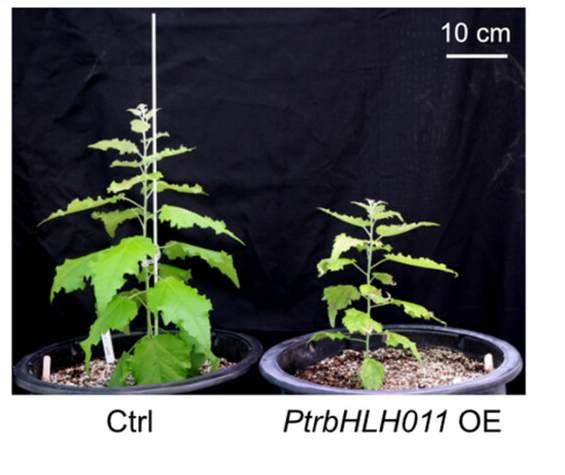
Scientists at Brookhaven National Laboratory (BNL) led a team that identified a protein, PtrbHLH011, within poplar involved in plant growth, lignin production, and disease resistance.
With increased lignin and iron, engineered poplar can be used to develop bioproducts for industrial applications. For example, lignin could be used for building materials such as cement or adhesives.
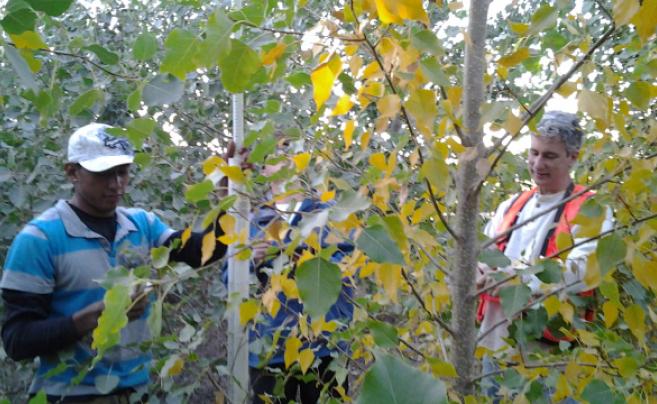
Described as the “DOE Tree,” poplar is considered one of the Flagship Plants for the U.S. Department of Energy (DOE) Joint Genome Institute (JGI), a DOE Office of Science User Facility located at Lawrence Berkeley National Laboratory (Berkeley Lab). because of its utility for biotechnology and bioenergy applications. Poplars grow quickly and the plants can be crossed to produce traits that make them more appealing bioenergy feedstock crops. The trees can be bred to be more resistant to environmental stresses such as nutrient-poor land, drought and disease.
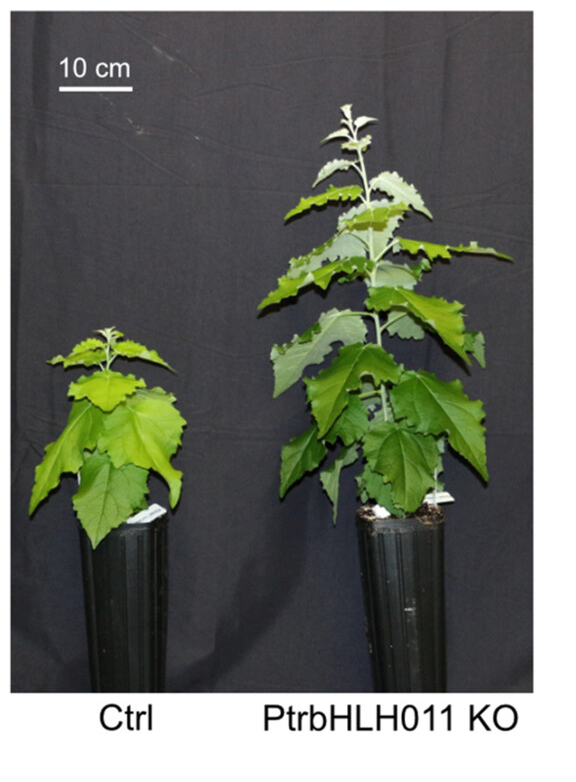
In the 1970s, the DOE targeted poplar as its primary wood crop for bioenergy feedstock development due to its ability to grow incredibly fast. They can also be hybridized to produce desirable traits.
Partly enabled by the JGI Community Science Program New Investigator program, BNL scientists focused on the protein PtrbHLH011 that appeared to be involved in iron deficiency response, formation of secondary cell walls (biosynthesis), and integrating molecules that combat infections. When the PtrbHLH011 gene was knocked out in poplar, those plants produced double the amount of lignin and triple the amount of iron in the leaves compared to the control poplar plants. The knockout plants also grew faster and had increased production of immunity-boosting flavonoids. Conversely, when the gene was overexpressed, those plants had stunted growth, weaker cell walls, and were less resistant to disease compared to the controls.
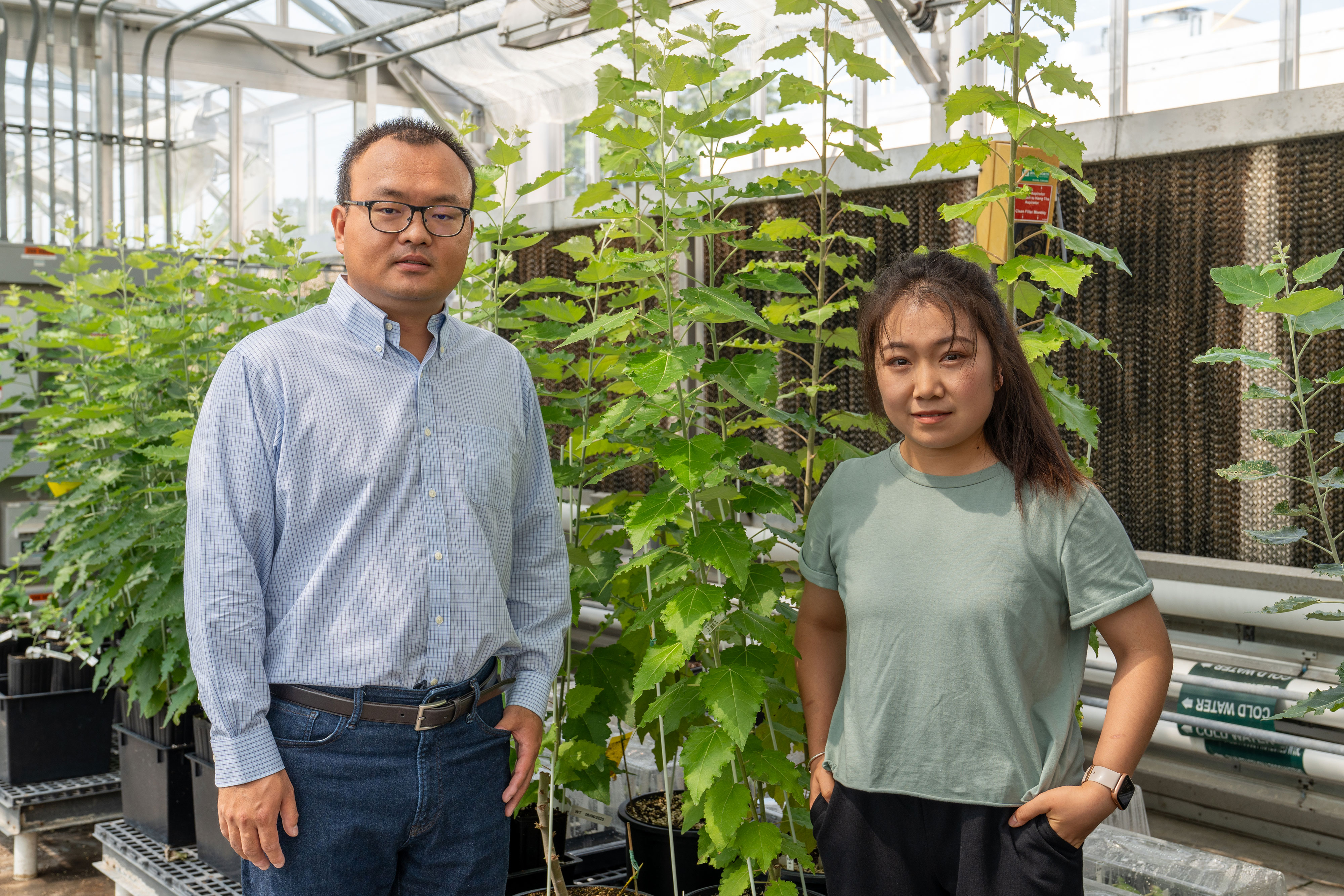
Analyses to understand how the protein influences poplar responses to nutrient stressors involved collaborators at multiple DOE facilities such as the Center for Functional Nanomaterials (CFN), National Synchrotron Light Source (NSLS-II), the Molecular Foundry and the Joint BioEnergy Institute (JBEI.) The JGI team measured the levels of gene expression in the engineered plants while a Molecular Foundry researcher provided insights into how the regulatory mechanism evolved.
BNL scientists performed confocal microscopy at the CFN to determine where the protein was expressed in plant cells. JBEI also contributed to lignin and flavonoid analyses. Additionally, x-ray bioimaging experiments were conducted to study iron accumulation and cell wall structure in the poplar plants with help from scientists at the NSLS-II.
These findings lay the foundations for engineering bioenergy crops to not only survive but thrive in tougher, nutrient-poor environments.
Biologists Engineer Larger, Tougher Crops for Fuel, Bioproducts