By characterizing the structure and function of a methylthio-alkane reductase system, researchers could open avenues for using bacteria to produce ethylene and more.
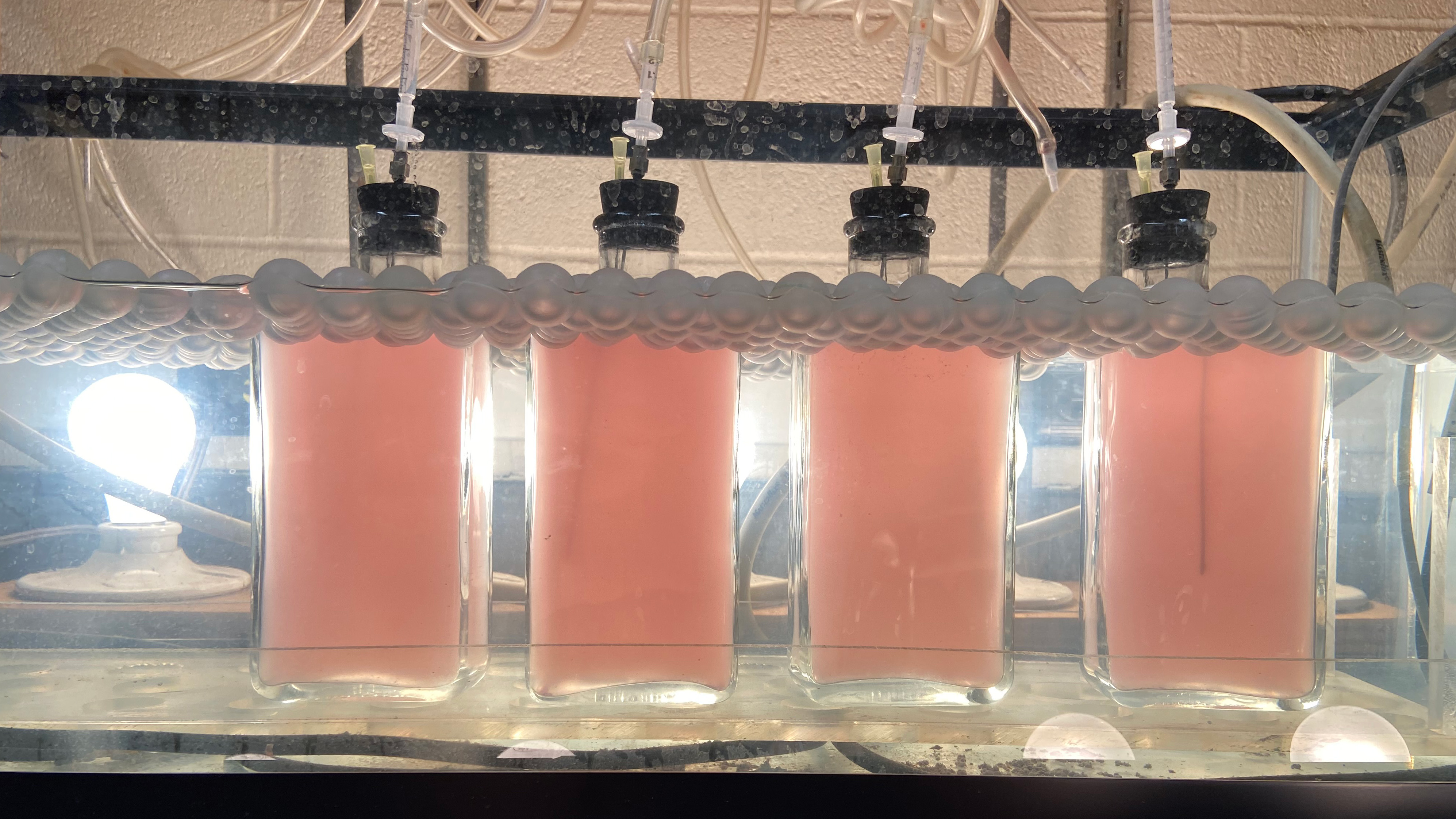
Microbes excel at recycling the abundant miscellanea of their surroundings. Case in point: for us, the smell of the ocean simply signals we’re near the beach. For bacteria, that salty, slightly stinky air is a rich source of the sulfur they need to grow and divide. Similar to the bacterial enzymes that fix nitrogen — nitrogenases — other enzymatic machinery harvests sulfur from gaseous organic sulfur compounds in the atmosphere.
Beyond bacteria, this enzymatic machinery has potential as an industrial workhorse. As these enzymes cleave the sulfur from gasses, they also produce hydrocarbons, the building blocks of many of our fuels and materials.
With an eye to harnessing these nitrogenase-like enzymes, researchers have recently characterized a specific enzyme, Methylthio-alkane Reductase (MAR) in host bacteria Rhodospirillum rubrum. Their work in Nature Catalysis details an enzyme system that was previously only understood at a genetic level.
Functional and structural experiments showed how the enzyme operates. It works as a two-part complex, along with a regulatory accessory protein and multiple metallocofactors. Given the MAR system’s potential to function as chemical Clydesdales, each piece of understanding paves the way for optimizing production of chemicals and plastics with this system.
“From a biotechnology standpoint, we can make ethylene from certain organic sulfur compounds, and now we can see we can go beyond that into propanol, propylene, and even larger hydrocarbons that are the staples of our chemical industry,” said Justin North, assistant professor of microbiology at Ohio State University and senior author of this work.

North led the team that did this work. His group from the Ohio State University joined Hannah Shafaat’s lab at the University of California at Los Angeles, and they worked with the U.S. Department of Energy (DOE) Joint Genome Institute (JGI), a DOE Office of Science User Facility located at Lawrence Berkeley National Laboratory (Berkeley Lab), and Brookhaven National Laboratory’s National Synchrotron Light Source II (NSLS-II). Leveraging resources from user facilities funded by the Biological and Environmental Research (BER) program, together with understanding enabled by Basic Energy Sciences (BES) programs, they were able to multiply the insights that each offers.
The work underscores how such inter-Facility collaborations through the Genomes to Structure and Function focus area of the JGI’s DNA Synthesis Science Program help advance DOE interests in the biotechnology innovation ecosystem.
“At JGI, we’ve done the synthesis, metagenome mining, all the way from sequencing to functional characterization, and a project like this — an exciting project — we were able to extend our capabilities, partnering with Brookhaven National Lab and NSLS-II to characterize the structure of these interesting enzymes,” said Yasuo Yoshikuni, head of the JGI’s DNA Synthesis program and a co-author on the paper.
First a pathway, then a purified enzyme (and a surprise)
This recent work builds on North’s focus on bacterial sulfur metabolism and leveraging it for biofuel production. After seeing that sulfur metabolism could produce methylthioethanol, a substance convertible to ethylene, he began looking into the genetic foundations of what would become the MAR enzyme.
Lately, North and his team set themselves up to move from that gene identification into mechanistic understanding. They engineered a plasmid-based Rhodospirillum rubrum system to overexpress the MAR enzyme, and leveraged affinity chromatography to isolate it. The JGI provided a range of constructs based on sequences for MAR enzymes from different organisms to support this system.
Based on the nitrogenase-like nature of the MAR system, they expected the enzyme to operate with a substrate, an energy source and an electron donor, in anoxic conditions. However, their experiments also highlighted another component, an accessory protein called MarS. MarS functions to downregulate the MAR system. Presumably, MarS has evolved as a safety switch, to conserve resources.
Despite its important role in this system, the accessory protein was a surprise for North and his team. The gene for MarS appears on an entirely different operon from the MAR system’s other genes.
A layer of structural and electronic insights illuminates more ingredients
With knowledge of the genes and enzymatic activity of the MAR system, the North team had a clear outline for how this complex worked. They leveraged cryo-EM structural characterization and EPR spectroscopy to fill in even more detail.
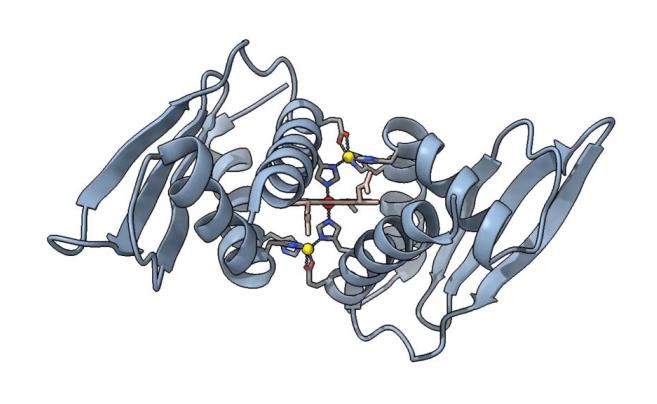
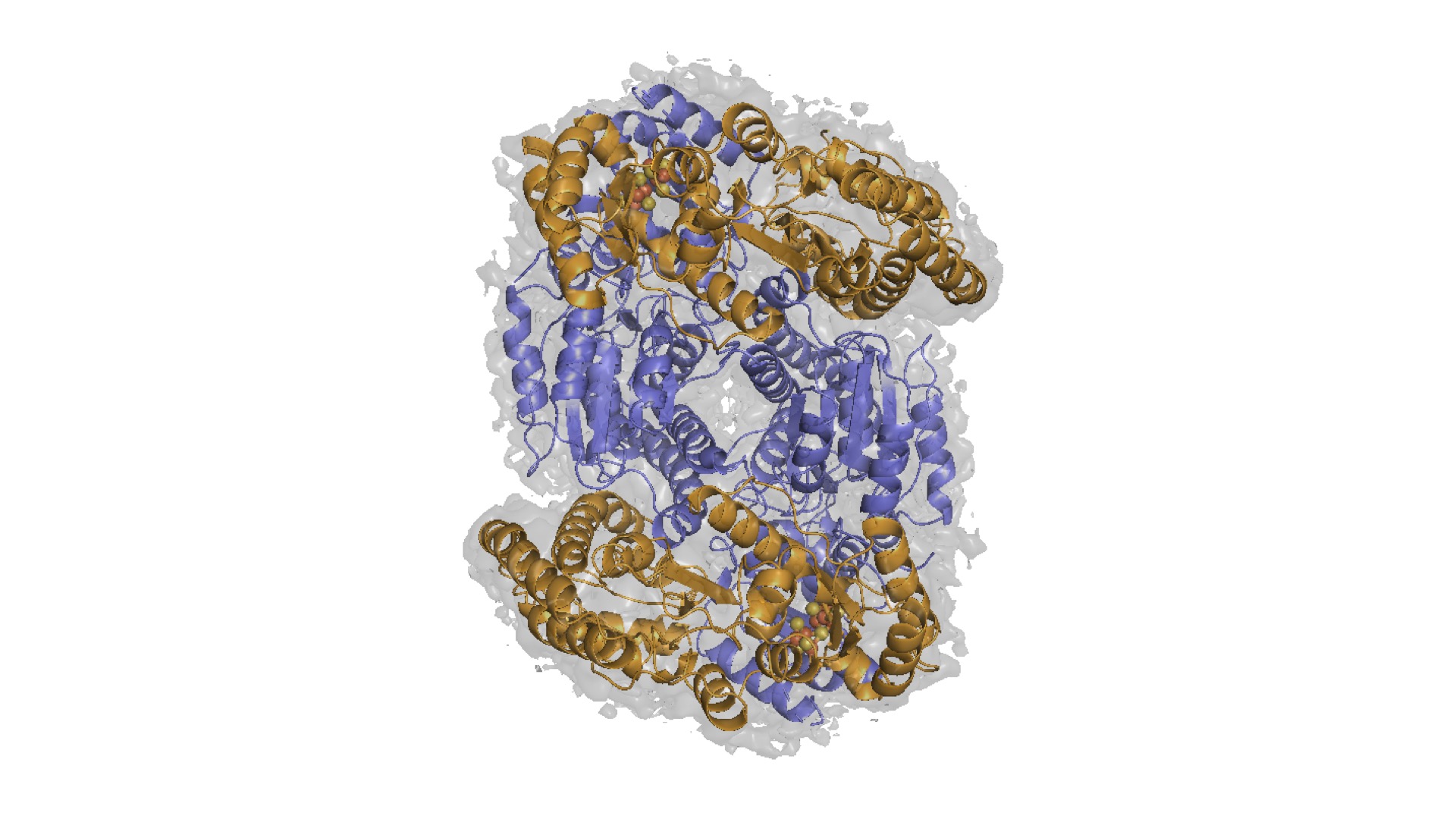
Brookhaven National Lab’s NSLS-II structural characterization and the Shafaat Lab’s spectroscopic characterization revealed similarity between MAR and nitrogenase in both folding and metallocofactors. This atomic resolution structure showed a P-cluster metallocofactor that is held in a similar manner, but not identical to those seen with nitrogenase enzymes. The structure along with EPR spectroscopy supported a second catalytic metallocofactor as seen with nitrogenase M-clusters, whose precise identity is of key interest. With this understanding, future work can focus on optimizing MAR function in production contexts.
“That allows us now to really start thinking about the structure-function relationship. What could we do, or how could we look into the environment for enzymes that are better at the ethylene reaction and give us more catalytically efficient enzymes for ethylene,” North said.

More Details
DNA Synthesis
Community Science Program
Murali, S. et al. (2025) Architecture, catalysis and regulation of methylthio-alkane reductase for bacterial sulfur acquisition from volatile organic compounds. Nature Catalysis. 10.1038/s41929-025-01425-3

DNA Synthesis Program
Through innovative research in synthetic biology, the JGI's DNA Synthesis Program enables the design and synthesis of complex genetic pathways and biosystems.

CSP Functional Genomics
The CSP Functional Genomics call is to enable users to perform state-of-the-art functional genomics research and to help them translate genomic information into biological function.