JGI-Foundry joint capability



Licensing Inquiries


 The Science
In Nature Communications, researchers describe a strategy to recover high value products from human waste. They genetically modified yeast to efficiently convert elements present in urine to create hydroxyapatite, a high-value biomaterial with a wide range of industrial applications. The team was led by researchers at two U.S. Department of Energy national user facilities – the DOE Joint Genome Institute and the Molecular Foundry – both located at Lawrence Berkeley National Laboratory (Berkeley Lab.)
Biomaterials are materials produced by living organisms. The collaboration between the JGI and the Foundry on this project highlights an ongoing partnership that combines the JGI’s genomic capabilities with the Foundry’s nanoscale materials research. As described in the JGI’s latest strategic plan, the Biomolecular Materials strategic initiative aims to enable the JGI user community to participate in the development and biotechnology applications of various biomaterials. These efforts align with BER missions to provide the fundamental science to support innovations for bioproduction and advance their utility across the bioeconomy.
Wastewater treatment involves removing the organic matter before it re-enters the environment. Urine accounts for just 1% of wastewater, but it contains most of the nitrogen and phosphorus. Researchers around the world are exploring ways of separating urine from other waste streams and recovering resources that could be used for products such as agricultural fertilizers and other materials for industrial processes.
To increase the interest in urine diversion processes, JGI and Foundry researchers sought other, high-value chemicals that could also be produced from urine while also potentially reducing the typical energy production costs associated. They focused on hydroxyapatite (HAp,) a biomineral with applications in orthopedics, oral care, plastic surgery and even archeological restoration. Through a Laboratory-Directed Research and Development project supported by Berkeley Lab, JGI and Foundry researchers realized that the yeast Saccharomyces boulardii was naturally performing activities similar to the specialized animal cells or osteoblasts that make HAp.
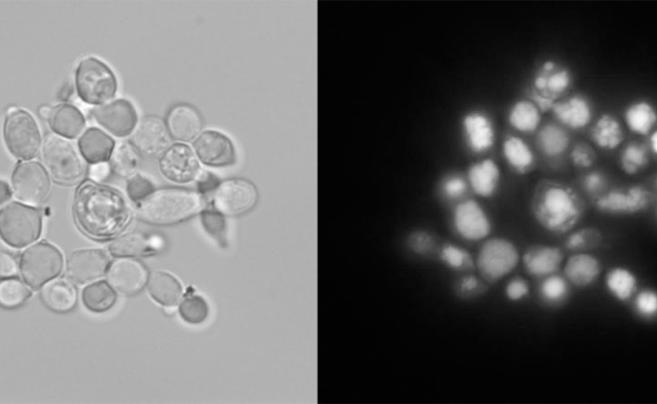
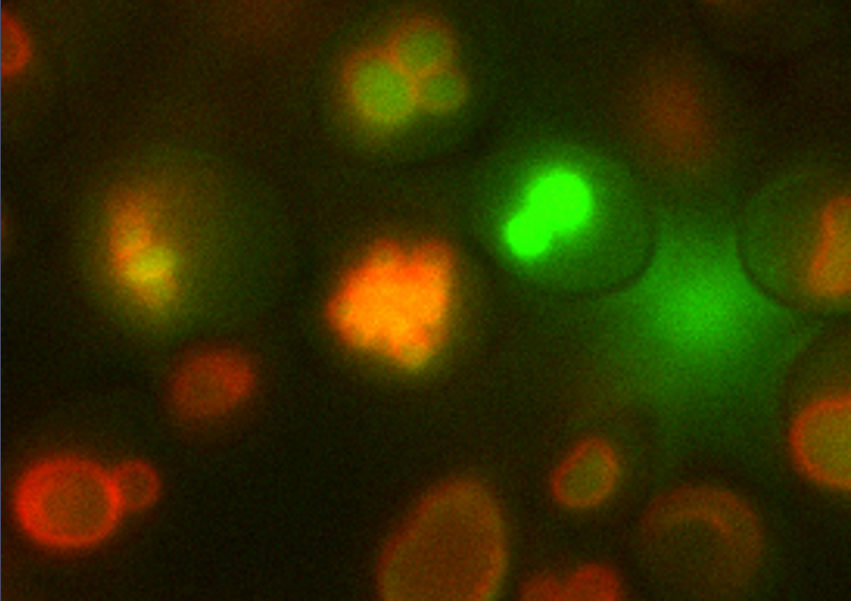
JGI researchers engineered a yeast strain that mimics the osteoblasts, dubbing their organism an osteoyeast. Foundry researchers then performed imaging analyses, using several microscopy techniques to confirm that the cells were producing HAp granules. The JGI team demonstrated that the osteoyeasts can produce a gram of hydroxyapatite per kilogram of urine. Collaborators at the DOE Center for Advanced Bioenergy and Bioproducts Innovation, a DOE Bioenergy Research Center at the University of Illinois Urbana-Champaign, conducted technoeconomic analysis to determine if this technology might have value in the real world. They estimated that a kilogram of high quality HAp from osteoyeasts would cost $19 to make, and it could be sold in the United States for $50-200, generating a potential profit of $1.4 million annually.
The team is working on developing new microbial strains that can synthesize other bio-based materials. For information about licensing the patented osteoyeast for hydroxyapatite production, contact the Berkeley Lab Intellectual Property Office.