Select interns look back on meaningful lessons from their summer experiences at the JGI
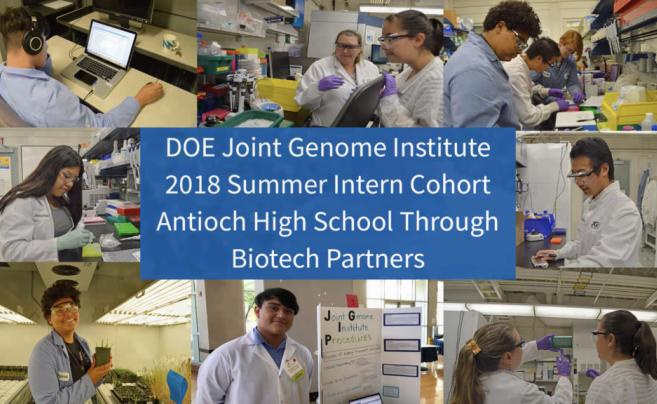
Berkeley Lab offers a variety of programs to help inspire and train the next generation of STEM professionals. Students can apply for internships and work onsite with an experienced researcher who serves as their mentor. By contributing to projects that will help them build skills and tools, they gain invaluable scientific and technical experiences.
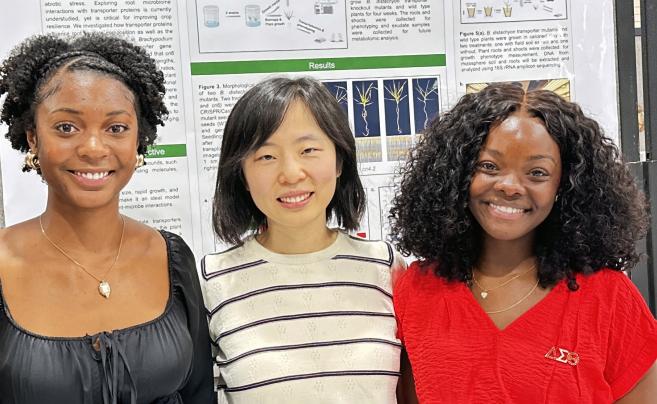
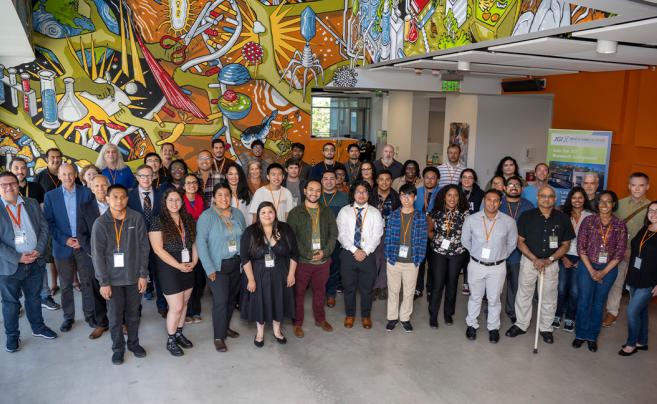
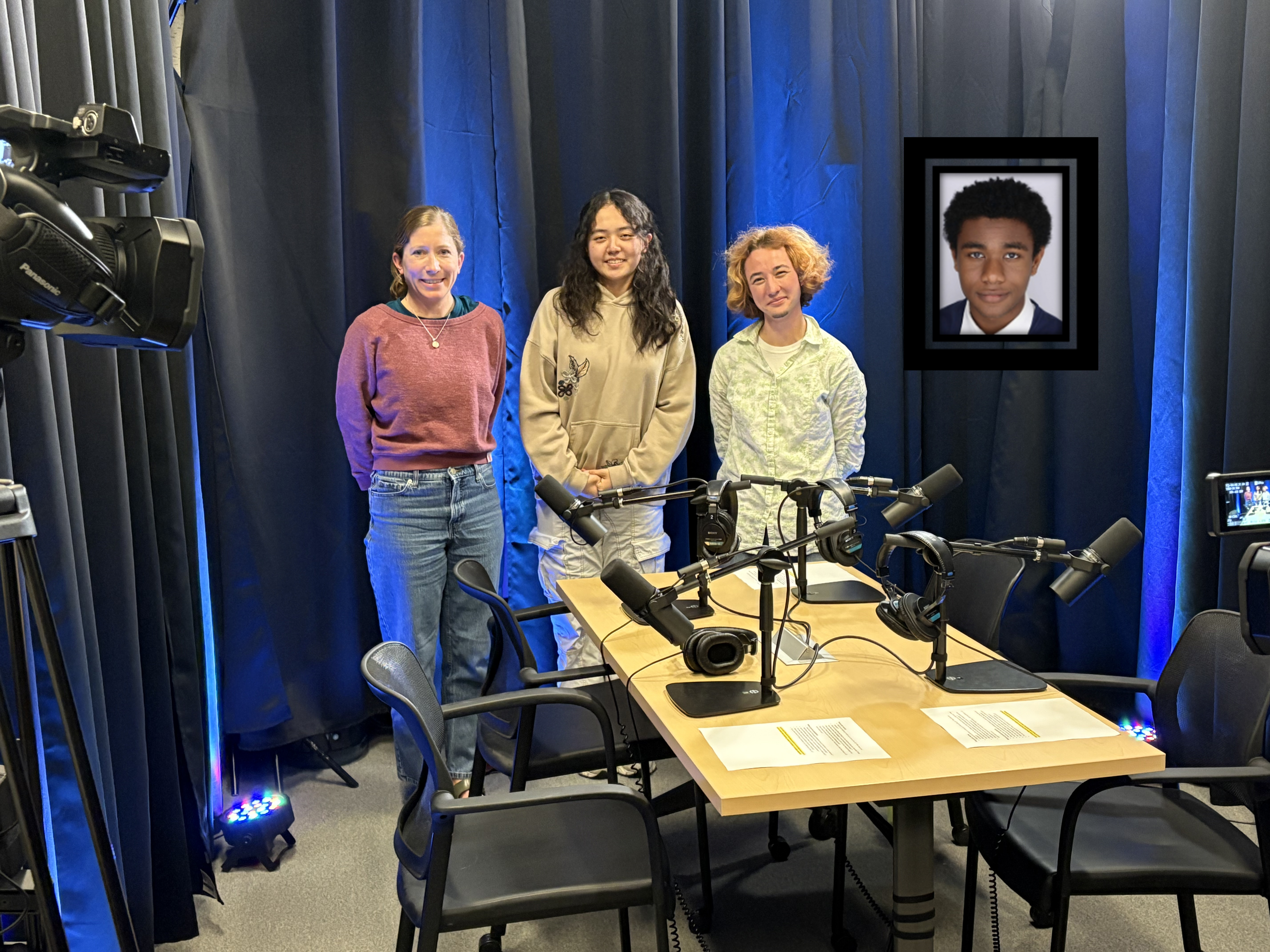
Genomic data scientist Deanna Beatty sat down with interns hosted at the JGI through three different internship programs – some managed by the Lab – to learn more about their experiences. Jehan Jacobs participated in the SEED Scholars @ LBNL program, with support from the SEED program at UC Berkeley. Sally Liao came in through the DOE Science Undergraduate Laboratory Internship program, while Oliver Benelli applied through the University of California's CalTeach initiative. During their time at the Joint Genome Institute, they interacted with interns from other programs and participated in onsite enrichment activities. Their summer experiences allowed them to learn more about communicating science, utilize the insights they gained from their mentors, and apply their newfound knowledge to future career paths.
To learn more about their summer internship experiences, watch the brief video below.
Video Transcript:
Deanna Beatty: Well, hi everyone. My name is Deanna Beatty, and I'm a genomic data scientist here at the JGI, and really happy to be here to talk with some of the students about their summer experience.
Jehan Jacobs: Hi. I'm Jehan Jacobs. I'm a rising sophomore at UC Berkeley studying data science. I’m here at the Lab with the SEED scholars at LBNL program.
Deanna Beatty: Did you get practice with science communication this summer, and did you have any takeaway or thing you wanted to share about it?
Jehan Jacobs: I have a poster session actually, like just a couple days from now. So I've been thinking about science communication, like prepping for that. But the one thing I've learned so far with like, presenting to like, my group and different other people is that it's really important to know who you're talking to and, like, know your audience and cater what you're saying to the audience, because it's like a little anecdote. I was making my, like, presentation slides for other people in my group and my mentor looked over and was like, “why are you explaining phylogeny to people who have been working here for like decades?” So, just important to like, kind of tailor what you're saying to the people that you're presenting to. So if you're presenting to people who are already experts in the field, maybe focus more on your results and explain them and some of the nuance there, or people who may not know about your field at all. I'll explain more about, like, the background, like, “what these things are specifically” and “how they relate to other different things” that they might know more about.
Deanna Beatty: That's awesome. That's, I think that's some really great advice.
Sally Liao: My name is Sally Liao. I am a rising junior at Northwestern University. I'm in the SULI program, and I'm studying computer science and statistics. I would say the biggest challenge for me was my research results not being the most promising. Going into the project, like, I kind of knew that my projects were experimental and definitely wasn't. Of course, like, no research is guaranteed good results, right? So I spent a lot of effort, like building my code base, running jobs that take like two days to, like, go through working with data sets that are really large and all of that work just for, so far, results that are not super promising. So that was definitely the biggest challenge. And what helped me out of that challenge is honestly my mentor’s support. He always encourages me and says, like, “I'm doing a good job,” even if the results aren't super promising right now. “You did the right process, and that's the most important thing. You learned a lot just by going through the process.” And now we know for the future, like what to do and what not to do. So I think that was definitely the biggest challenge and the biggest lesson I got from this research experience.
Deanna Beatty: That seems like a really valuable lesson, that you can always take something away, even if the results are null or maybe not what you expected. You learned a lot about how to work with these various models and trial and error, and what it's really like to do research, which is a lot of “try something out and pivot when you need to.”
Sally Liao: Yeah.
Oliver Benelli: My name is Oliver Benelli. I'm a student with UC Berkeley. I'm here partially through the CalTeach program, mentoring under Zhong Wang. Yeah. I'm a mathematics major in my junior year going into my senior year.
Deanna Beatty: Now that you're kind of wrapping up your internship, has this internship changed, in your mind, anything about the career path that you might want to take going forward? Do you foresee yourself continuing on this track, trying new things out, pivoting?
Oliver Benelli: I was pure mathematics before this. Although my interest was always laid in sort of, in analysis. So sort of more computational generally. But yeah, no I love research, I've never done research before so, getting to have this experience was very novel for me, and especially in like a biological field. It's very outside of, like, what I'm used to. I actually applied for a neuroscience program. And I'll be doing research, hopefully, if I get in with them this coming fall and spring term.
Deanna Beatty: Congratulations. That's awesome.
Oliver Benelli: Yeah, I'm very interested in sort of seeing what I can do with the sort of computational skills that I already have and with this sort of data science lens. It turns out like a lot of fields would like to have more data science integrated into them, especially with, like, this rise of, like the usage of all this data that we have collected. Right? So.
Deanna Beatty: Awesome.
More Details
Workforce Development & Education Outreach
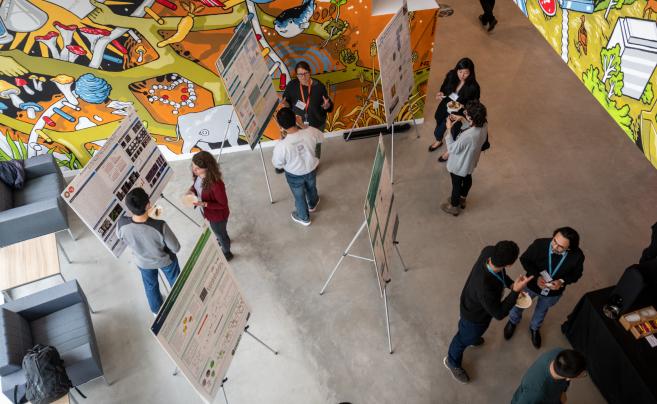
The JGI aims to inspire more students to enter the STEM workforce by fostering an understanding of our role in enabling complex biological and environmental systems research.